Tired of Scrambling at the Gate? This E-Ticket Trick Made My Solo Trips Seamless
Have you ever stood at the boarding gate, heart racing, fumbling through your phone for the right ticket? I used to dread that moment—until I discovered how smart e-ticket tools can do so much more than just store a barcode. They quietly organize, remind, and adapt to your journey. What seemed like a simple digital upgrade became a game-changer for my confidence and calm as a solo traveler. Let me show you how.
The Solo Traveler’s Hidden Stress: More Than Just Packing Light
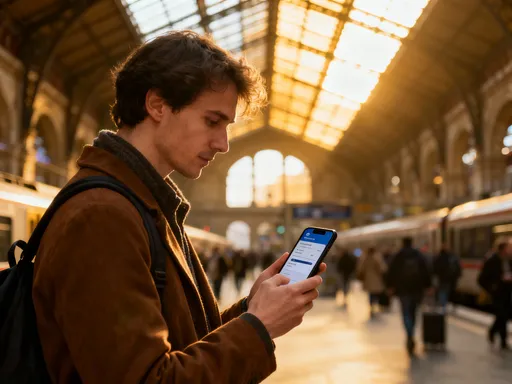
When I first started traveling alone, I thought the hardest part would be figuring out where to eat or whether I’d feel lonely. But the real challenge snuck up on me at the train station in Lyon—juggling three apps, trying to find my platform, realizing too late that my connection had changed. No one to whisper to, no second set of eyes to double-check. Just me, a backpack, and a growing knot in my stomach. That’s when I realized: solo travel isn’t just about freedom. It’s about responsibility. Every decision, every detail, rests on your shoulders.
And so much of that stress lives in the small stuff—like tickets. Paper ones get lost. Screens glitch. Notifications get buried. For years, I carried printouts in plastic sleeves, just in case. But even then, I’d stand frozen at the gate, wondering: Is this the right one? Did they change the time? Is my phone about to die? It wasn’t just inconvenient. It was exhausting. And honestly? It made me question whether I was cut out for this kind of life.
But here’s what shifted everything: I stopped seeing e-tickets as just digital replacements and started treating them as part of my travel support system. Not a backup. Not a luxury. A necessity. Like a good pair of walking shoes or a well-packed first-aid kit, the right digital tools became part of my self-care. Because when you’re alone, being organized isn’t just practical—it’s protective. It’s how you build trust in yourself. And that trust? That’s what turns anxiety into adventure.
Beyond the Barcode: What Your E-Ticket App Can Really Do
Most of us think of e-tickets as little more than a scanned code—something that replaces a paper stub. Tap, scan, move on. But the truth is, modern e-ticket platforms are doing way more behind the scenes. They’re not just holding your ticket. They’re watching out for you. I learned this the hard way during a trip to Lisbon. I’d checked in online, saved my boarding pass to my phone, and felt satisfied. But two hours before takeoff, I got a quiet alert: "Gate changed from C12 to B7. You’re advised to arrive at the gate by 3:45 PM."
I hadn’t opened the app. I wasn’t even thinking about the flight. But the system knew. It saw the update from the airport, cross-referenced it with my location and timeline, and nudged me—gently, clearly. That small notification saved me from missing my flight. No panic, no sprinting through the terminal. Just a calm walk to the new gate. And in that moment, I realized: this wasn’t just an app. It was a quiet travel partner.
Today’s best e-ticket systems do things most of us don’t even know about. They sync with your calendar, so your flight appears alongside your dentist appointment and yoga class. They track delays in real time and adjust your suggested departure time if traffic is bad. Some even integrate with local transit, showing you how long it’ll take to get from your hotel to the airport using current bus schedules. Others let you store train tickets, ferry reservations, and ride-share bookings all in one place—no more switching between five different apps while standing in the rain.
And here’s the part that really changed my mindset: these tools don’t just react. They anticipate. They learn. They protect your peace. So next time you open your e-ticket app, don’t just look for the barcode. Look at the whole picture. Is it showing your next connection? Did it warn you about a delay? Does it know you usually board early? Because when you start seeing your phone as a full travel assistant—not just a ticket holder—you stop scrambling. You start breathing.
One Tap to Peace of Mind: How Automation Reduces Mental Load
Solo travel is wonderful—but it’s also mentally heavy. You’re not just seeing new places. You’re making constant decisions: When do I leave? Where’s the platform? Did I pack the adapter? Is my passport in my bag? That mental checklist runs in the background all day, every day. Psychologists call it "cognitive load"—and for women traveling alone, it’s often even higher. We’re trained to be alert, to plan, to prepare. And while that keeps us safe, it can also drain us.
That’s why automation isn’t just a tech feature. It’s a form of emotional relief. When your e-ticket system automatically pulls in your flight, hotel, and train reservations into one timeline, it does more than organize. It frees up space in your brain. I remember a trip to Prague where my flight was delayed by three hours. Normally, that would’ve sent me into full crisis mode—would I make my train? Should I rebook? Where do I wait? But this time, my app updated everything instantly. My connecting train ticket adjusted. My hotel check-in time shifted. A new alert said: "You now have 47 minutes to transfer. Proceed to Gate B22 at a relaxed pace."
I stood there, stunned. No stress. No frantic calls. Just a calm reassurance that I was still on track. That moment taught me something powerful: when technology handles the logistics, you can actually enjoy the journey. You can sip your coffee. You can watch the clouds. You can be present. And for someone who’s used to carrying the weight of every detail, that’s nothing short of liberation.
So how do you get there? Start by choosing platforms that offer auto-syncing. Look for apps that connect with your email to pull in reservations automatically. Enable notifications—yes, even the ones you usually ignore. And take five minutes before each trip to review your digital itinerary. Make sure everything’s linked, updated, and backed up. It’s not about becoming a tech expert. It’s about giving yourself the gift of mental rest. And trust me—your future self, standing calmly at the gate, will thank you.
Offline Access: Why Confidence Comes from Preparedness
There’s a quiet terror that comes with losing phone signal in an unfamiliar place. You step off the plane, open your app, and—nothing. No Wi-Fi. No data. And suddenly, that digital ticket you trusted feels useless. I learned this the hard way in the mountains of northern Portugal. I’d taken a regional bus from Braga, excited to visit a small village known for its pottery. But when I arrived, the driver motioned for tickets. I pulled out my phone—no signal. No way to load the QR code. I stood there, embarrassed, fumbling with cached emails, hoping something would work.
Thankfully, I had downloaded my ticket earlier, and after a few taps, the barcode appeared—offline. The driver nodded, and I slid into a seat, heart still pounding. But that moment stayed with me. Because it showed me a truth I’d overlooked: the best technology works when you need it most—even when the network doesn’t. And that’s where offline access becomes a lifeline.
Most major e-ticket apps—airlines, train services, even ride-shares—allow you to download tickets for offline use. You don’t need to be online to show them. But so many of us skip this step, assuming we’ll have signal when we need it. And sometimes, we do. But other times, we don’t. And that’s when preparation makes all the difference.
Here’s what I do now: as soon as I book any trip, I open the app and download every ticket. I save boarding passes the night before. I check that they’re accessible without Wi-Fi. I even take a screenshot as a backup—just in case. And I’ve taught my daughter to do the same. It takes two minutes. But it gives me hours of confidence. Because I know that no matter where I am—on a train through the Alps, in a subway tunnel, or on a ferry crossing a windy sea—I can prove I belong where I am. And that’s not just convenience. That’s dignity.
Seamless Transfers: Linking Flights, Trains, and Rides Without Panic
One of the trickiest parts of solo travel? The in-between moments. Not the destination. Not the departure. But the transfer—the moment you step off one vehicle and need to find the next, often in a hurry, in a place you’ve never been. I’ll never forget missing a connecting train in Berlin because the signs were unclear, the platform changed, and my app didn’t tell me until it was too late. I ended up waiting three hours for the next one, sitting on a cold bench, feeling frustrated and foolish.
But last year, I took the same route—this time with a multi-modal travel app that linked my flight, train, and final ride-share into one continuous journey. As I landed, my phone showed: "Baggage claim in 18 minutes. Proceed to Train Platform 3. Your train departs in 42 minutes. Estimated walk time: 9 minutes." Then, when the train was delayed, it updated: "New connection available. Platform 5, departing in 8 minutes. Run if possible, or next option in 27 minutes." I made the train. And later, as I approached the city, it said: "Your ride-share will meet you at Exit B. Driver: Carlos. Car: Silver Volkswagen."
No guessing. No stress. Just clear, step-by-step guidance. It felt like having a travel guide walking beside me, whispering directions. And that’s the power of integrated e-ticket systems. They don’t just show your tickets. They show your journey—start to finish. They anticipate problems. They suggest solutions. They turn chaos into calm.
If you’re not using a platform like this yet, start exploring. Look for apps that combine air, rail, and local transit. Some even let you book everything in one place. The key is continuity—having one timeline that moves with you. And when delays happen, as they always do, let the app do the thinking. It’ll recalculate. It’ll suggest alternatives. It’ll help you stay in control—without breaking a sweat.
Personalization: When Your Ticket Knows You Better
The most comforting travel experiences aren’t always the fanciest. Sometimes, it’s the small things—the barista who remembers your order, the hotel clerk who says good morning by name. When you’re traveling alone, those moments of recognition matter. They make you feel seen. And surprisingly, technology can offer that too.
On a recent flight to Edinburgh, I opened my app to check my seat. And there it was—window seat, row 14, just like I always prefer. I hadn’t selected it. I hadn’t even logged in yet. The app had remembered. And below it: "Would you like your usual vegetarian meal?" I smiled. It felt like coming home. That’s the quiet magic of personalization. When your e-ticket system learns your habits—your favorite seat, your meal choice, your tendency to check in early—it stops feeling like software and starts feeling like a host.
And no, this isn’t about being tracked. It’s about opting in to convenience. Most of these features are user-controlled. You decide what to save, what to share. But when you do, the rewards are real. No more scrolling through seat maps. No more typing in the same meal request every time. The system works for you—because you’ve taught it how.
For solo travelers, this kind of personal touch does more than save time. It builds comfort. It reduces the feeling of being anonymous in a crowd. It says: you matter. Your preferences matter. And that subtle recognition can make a long journey feel a little kinder. So don’t skip the profile settings. Take a minute to set your seat preference. Save your meal choice. Let the app learn you. Because the best technology doesn’t just serve you. It sees you.
Building Travel Confidence: From Anxiety to Empowerment
When I look back at my early solo trips, I see a woman who was brave but anxious. Always preparing, always checking, always worried about making a mistake. Today, I’m still careful. But I’m also calmer. More present. More willing to say yes to unexpected opportunities. And that shift didn’t happen because I became fearless. It happened because I found tools that made me feel supported.
My e-ticket app didn’t just help me board planes. It helped me trust myself. Every time it reminded me of a gate change, every time it guided me through a transfer, every time it worked offline in a remote village, it sent a quiet message: you’ve got this. And slowly, I started to believe it.
That’s the deeper truth about technology in travel—it’s not just about efficiency. It’s about empowerment. It’s about replacing fear with confidence, confusion with clarity, isolation with connection. And for women who travel alone, who carry both the joy and the weight of independence, that support can be transformative.
So if you’ve ever stood at a gate, heart pounding, searching for a ticket, I want to tell you this: you don’t have to do it all in your head. Let your phone help. Choose tools that do more than store data—choose ones that care for your peace. Because the right technology doesn’t just get you to your destination. It helps you arrive as your best self—calm, capable, and ready to embrace whatever comes next.