Tracked My Family’s Safety Habits for 90 Days: The Lighting System That Brought Us Closer
Ever feel like you’re always worrying—did the kids remember to lock the back door? Is Mom okay after turning in early? I used to lie awake with the same thoughts. Then I tried something simple but surprising: a smart lighting system that didn’t just turn on when someone walked by, but quietly showed me patterns in our daily lives. Over three months, it didn’t just make our home safer—it helped us understand each other better. It wasn’t about surveillance or high-tech alarms. It was about knowing, without asking, that someone I love was up, moving, or simply resting well. And in those small, quiet signals, I found something rare: peace of mind that didn’t come from checking in, but from simply feeling connected.
The Night That Changed Everything
It was a Thursday night, nothing special—until the storm rolled in. The wind howled, the power flickered, and then everything went dark. I sat in my living room, wrapped in a blanket, when I remembered: my sister lived just ten minutes away, alone in her little bungalow, and she’d mentioned earlier that her backup generator wasn’t working. I tried calling—no answer. Texting—no reply. I drove over, heart pounding, only to find her car in the driveway and all the doors locked. She was fine, of course. She’d just gone to bed early with a book and hadn’t heard her phone. But that night changed everything for me. Because I realized something unsettling: even though we were close, even though we talked regularly, I had no real way of knowing if she was okay when I couldn’t reach her. And that feeling—of helplessness wrapped in love—stuck with me.
I didn’t want to bug her with constant check-ins. I didn’t want to install cameras in her home—that felt too much like watching, not caring. What I wanted was something subtle, something gentle. A quiet way to know she was moving through her evening like usual, that her rhythm hadn’t been disrupted. That’s when I started looking into smart lighting systems. Not the flashy ones with color shows and voice commands, but the ones designed with safety and routine in mind. I wanted a system that didn’t scream “technology!” but instead whispered, “I’m here.” Something that respected privacy but still offered reassurance. And after weeks of research, I found one that did exactly that—not by tracking faces or recording sound, but by paying attention to light.
Why Lighting? The Quiet Power of Presence
Think about it: light has always been a signal. A porch light left on for a late-coming teenager. A nightlight glowing softly down the hall. A lamp in the window during a snowstorm. These aren’t just functional—they’re emotional. They say, “Someone is home. Someone is awake. Someone is waiting.” That’s the power of light. It doesn’t need words. It doesn’t need apps. It just is. So when I started exploring how modern lighting could support family safety, I wasn’t thinking about bright floodlights or motion-sensing alarms. I was thinking about presence. About the quiet comfort of knowing someone is moving through their day the way they usually do.
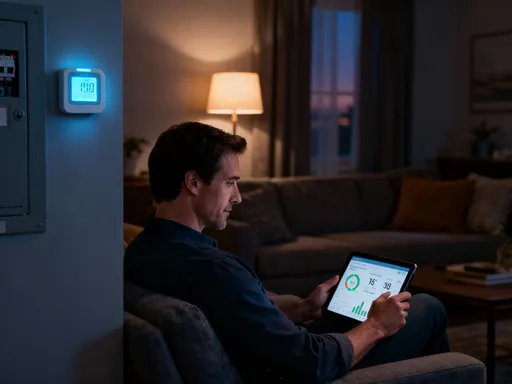
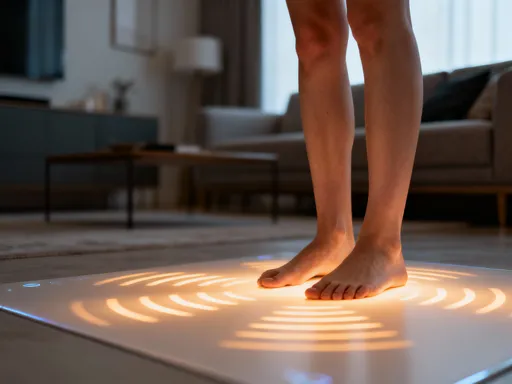
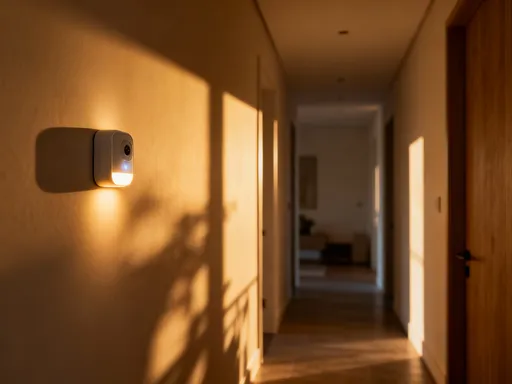
The system I eventually chose uses motion-activated lights in key areas—entryways, hallways, the kitchen—but it’s not just about turning lights on when someone walks by. It’s about learning patterns. Over time, it begins to understand when certain rooms are typically used. The kitchen light comes on around 7 a.m.? That’s Dad making coffee. The living room lamp stays on until 9:30 p.m.? That’s my niece reading before bed. When those patterns shift—like the bathroom light turning on three times between 2 and 3 a.m.—the system sends a gentle alert. Not a siren. Not a pop-up that screams “DANGER!” Just a soft notification, like a whisper: “Something’s different.” And that whisper? It’s enough to prompt a call, a text, a quiet “You okay?” without jumping to conclusions.
What I love most is that it doesn’t feel invasive. There are no cameras. No audio recording. No need to log in or check a dashboard. It’s just light—doing what light has always done: showing us life is happening. And for someone like me, who worries but doesn’t want to hover, it’s the perfect balance. It’s not about control. It’s about care.
Choosing the Right System: Simplicity Over Complexity
When I first started looking, I was overwhelmed. So many systems promised “smart safety,” but most were too complicated. Apps with endless settings. Notifications that dinged every time a light turned on. Passwords, updates, syncing issues. I knew that if it wasn’t easy for everyone in the family to use—especially my mom, who still thinks “the cloud” is something in the sky—it just wouldn’t work. I needed something intuitive. Something that didn’t require a manual or a tech-savvy teenager to set up.
The one I chose uses simple color cues. During the day, the lights stay warm white—normal, familiar. But in the evening, as bedtime approaches, they shift slightly to a softer, warmer tone. And in the bedrooms, a gentle blue glow appears for 15 minutes after the main lights go off—like a nightlight, but smarter. It’s not just for safety; it’s a visual rhythm. My mom, who has trouble sleeping, loves it. She says the blue light helps her wind down, and I love knowing that when I check the app (yes, there’s a simple one, but I only open it once a day), I can see that her light turned on at 10 p.m. and stayed on for a while. That tells me she got up, moved around, but didn’t stay up all night. That’s reassurance without intrusion.
The real test came when my teenage nephew stayed with my sister for a week. He’s tech-savvy, but he didn’t even notice the system at first. “Wait, the lights turn on by themselves?” he asked one night, startled. But within a day, he got used to it. And when he accidentally left the back door unlocked, the system detected unusual motion and sent a quiet alert. I called my sister, she checked, and sure enough—the door was ajar. No drama. No panic. Just a quick fix. That’s when I knew we’d found the right balance: smart enough to help, simple enough to fade into the background.
Tracking Progress Without Pressure
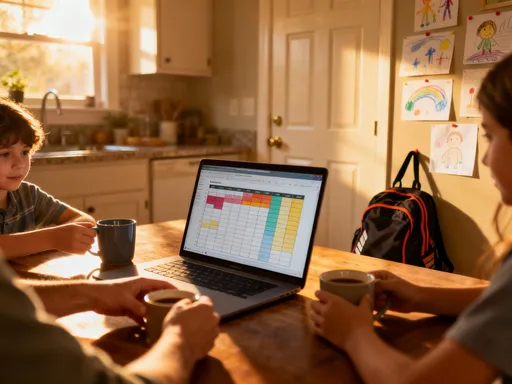
At first, I thought of the system only as a safety tool. But over time, I began to see it differently. I started reviewing the weekly summaries—not obsessively, just every Sunday morning with my coffee. And I noticed things. My niece, who used to put off homework until midnight, began turning on her desk lamp earlier and earlier each week. By week six, she was starting at 7 p.m. consistently. That wasn’t something I’d forced or nagged about. It was her own rhythm, reflected in the data. The light didn’t judge. It just showed the truth. And seeing that progress—quiet, steady, visible—made me proud in a way that grades never could.
My dad, who’d had hip surgery last year, was another story. Recovery was slow, and he didn’t like talking about how tired he felt. But the lights told a different story. At first, his evening movement was limited—just a trip to the kitchen around 7 p.m., then straight to bed. But week by week, I saw the kitchen light come on later. Then the living room lamp stayed on longer. By week ten, he was up walking around at 9 p.m., making tea, reading the paper. The system didn’t track steps or heart rate. It didn’t need to. It just showed life returning, one small light at a time. And that was more meaningful than any fitness tracker could ever be.
What I realized is that progress doesn’t always come with fanfare. Sometimes, it’s just a lamp turning on at a new time. A hallway light staying on five minutes longer. These aren’t dramatic changes, but they’re real. And because the system doesn’t pressure anyone—no reminders, no alerts for “good” behavior—it feels safe to grow. There’s no judgment in a light. Just possibility.
Building Emotional Awareness Through Routine
One of the most unexpected benefits was how the system helped me tune into emotional shifts. My cousin, who lives nearby, went through a tough breakup in the second month. I knew she was hurting, but she didn’t want to talk about it. I didn’t push. But I started noticing her lighting patterns. Her living room lamp, which used to come on around 7:30 every evening, stayed off for days. Then, when it did come on, it was late—after 10 p.m.—and only for an hour. No kitchen light. No late-night tea. Just silence.
I didn’t call. I didn’t text. But I made sure to drop off soup the next day. “Just thought you might like something warm,” I said. She smiled, hugged me, and didn’t say much. But that night, her kitchen light came on. Then the living room. Then, for the first time in a week, the reading lamp stayed on past 9 p.m. The system didn’t tell me how she felt. But it told me when she was ready—just a little—to re-engage with her routine. And that was enough for me to know when to reach out, and when to give space.
We’ve started using the lights as conversation starters. “I noticed your reading lamp’s been on later—discover any good books?” I asked my mom one day. She laughed. “You’re spying on me!” she said. “Not spying,” I said. “Just noticing.” And it’s true. I’m not watching her. I’m paying attention. There’s a difference. The lights don’t replace heart-to-heart talks. But they make them easier. They give us a way in—a gentle opening when words feel too heavy.
Making It Work for Every Generation
One of my biggest fears was that the system wouldn’t work for everyone. My 78-year-old uncle, for example, doesn’t own a smartphone. He still uses a flip phone and thinks Alexa is a person. I worried he’d find the lights confusing or annoying. But the beauty of this system is that it requires no interaction. No app. No login. No buttons to press. The lights just work. And over time, he started to notice. “Funny how the hall light comes on when I walk by,” he said one evening. “Saves me from stubbing my toe.” That was it. No tutorial. No setup. Just light, doing its job.
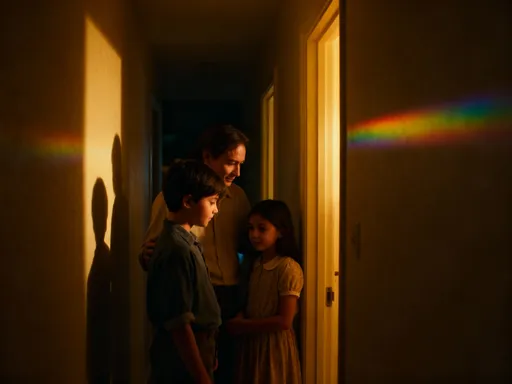
For the kids, we added a small, fun feature: when everyone in the household is home and the front door locks, the hallway lights pulse in a soft rainbow pattern for ten seconds. It’s like a quiet celebration. “We’re all safe. We’re all together.” My niece calls it the “family high-five.” My nephew rolls his eyes—but I’ve caught him smiling when it happens. It’s not flashy. It’s not loud. But it’s meaningful. It’s a moment of belonging, built into the rhythm of the day.
And that’s the magic of it. It works for everyone because it doesn’t demand anything. It doesn’t ask for passwords or updates. It doesn’t need to be “used.” It just is. And in being there, quietly, consistently, it creates a sense of safety that isn’t about fear—it’s about connection.
A New Kind of Family Bond—Built on Light and Trust
After 90 days, I turned off the detailed tracking feature. I didn’t need the weekly summaries anymore. I’d learned what I needed to know. The system had done its job—not by making us safer in the way I first imagined, but by helping us see each other more clearly. We weren’t just avoiding danger. We were noticing care. Growth. Resilience. The soft glow of a living room lamp wasn’t just light—it was presence. It was my mom reading. My dad making tea. My niece studying. My sister settling in for the night.
In a world full of loud notifications, constant pings, and endless demands on our attention, sometimes the quietest signals mean the most. This system didn’t bring us closer because it was high-tech. It brought us closer because it helped us care in a way that felt natural, gentle, and deeply human. It reminded me that safety isn’t just about locks and alarms. It’s about knowing someone is there. That they’re moving through their day. That they’re okay.
And now, when I see a light on in a window across town, I don’t just see electricity. I see life. I see love. I see the quiet, steady rhythm of a family that’s learning to stay connected—one soft glow at a time.