Tired of 'We’ll figure it out later'? This tool finally got our group chats making plans that actually happen
Ever found yourself stuck in a loop of indecision with friends or family? “Where should we eat?” “Who’s bringing what?” “Is anyone even reading this chat?” You’re not alone. Group planning can turn into a mess of confusion, missed messages, and forgotten responsibilities. But what if there was a way to cut through the noise? I discovered a simple tech fix that transformed our chaotic conversations into clear, actionable plans—without the stress. It didn’t require a new app, a subscription, or a tech genius in the group. Just a shift in how we shared information. And honestly? It changed everything.
The Chaos of Group Planning (And Why We All Feel It)
Let’s be real—how many of us have been part of a group chat that starts with excitement and ends in silence? You know the kind: someone suggests a brunch date, a few people respond with heart emojis, a couple ask about dietary restrictions, and then… nothing. Days go by. No time is confirmed. No place is booked. And suddenly, the weekend arrives and no one knows what’s happening. I’ve been there—more times than I’d like to admit. Last spring, my neighborhood moms’ group tried to organize a picnic at the park. We spent over a week going back and forth. “Does 11 a.m. work?” “Can we bring kids?” “Who’s bringing the cooler?” By the time we agreed on a setup time, half the group had already made other plans. The picnic happened, but it felt rushed, half-hearted, and honestly, a little disappointing.
And it’s not just about outings. Think about holiday gift swaps, carpool schedules, or even deciding on a restaurant for a family reunion. These moments should bring us together, but too often, they become sources of quiet frustration. Someone ends up doing all the work. Others feel left out. Misunderstandings pop up like weeds. “I thought you were handling drinks.” “I didn’t realize it was potluck—I thought we were ordering pizza.” These aren’t conflicts about love or loyalty. They’re about clarity. The problem isn’t that we don’t care—it’s that we’re trying to coordinate complex little events using tools built for quick jokes and emoji reactions. Text messages aren’t designed for tracking decisions, assigning tasks, or comparing options. They’re great for “LOL” and “OMG, that dress!” but not so great for “Here’s the rental cost breakdown and who’s paying what.”
What I’ve learned is that the emotional toll of these planning fails is real. It chips away at trust. It makes us hesitate to suggest new things. We start thinking, “Why bother?” And that’s a shame, because connection is everything—especially in our busy, scattered lives. We crave time with our people. We want to celebrate birthdays, share meals, and create memories. But if the process of planning feels like a chore, we stop trying. I saw it in my sister’s face when she showed up to a birthday dinner she didn’t even know was happening. “I guess I missed that message,” she said, smiling, but I could tell she was hurt. That moment stuck with me. No one should feel like an afterthought. So I started asking: what if we could make group planning feel easier? Not perfect—just easier. Clearer. Fairer. What if we used tech not to add more noise, but to reduce it?
How Price Comparison Tools Became Our Unexpected Hero
It started with something small—a baby shower gift for my cousin. Five of us were chipping in, and we wanted to get something nice but not overpriced. One of my friends, Lisa, sent a link with three options: same product, different stores, side by side. Prices were right there. Shipping times. Ratings. Even return policies. No one had to ask, “Is this the best deal?” We could all see it. We picked the lowest price with free shipping, split it evenly, and moved on. Done in under ten minutes. That was the first time I realized: when everyone sees the same information, decisions happen faster.
Before that, we’d usually take turns sending links. “Here’s one I found!” “Wait, this one’s cheaper!” “But does it ship in time?” It felt like a scavenger hunt with no finish line. But with the comparison tool, we weren’t guessing. We weren’t doubting. We weren’t wondering if someone was getting a better deal. Everyone had the same view. And that tiny shift—seeing options together—changed the tone of the whole conversation. No more passive-aggressive “Are we sure this is the best option?” Just calm, collective agreement.
I started thinking: could we use this same idea for other things? Not just shopping—what about planning? What if we applied that same clarity to choosing a venue, splitting costs, or even picking a date? The tool wasn’t magic. It didn’t make decisions for us. But it removed the friction. It gave us a shared starting point. And in group dynamics, that’s huge. Think about it: how many arguments happen because someone feels left out of the loop? How many plans fall apart because one person didn’t know the budget? Price comparison tools don’t just save money—they save relationships. They create transparency. And transparency builds trust. That’s when it hit me: this wasn’t just about shopping smarter. It was about communicating better.
From Price Checks to Clear Communication
Once we got used to comparing prices together, we started applying the same logic to everything. Our next test: planning a joint birthday dinner for two friends. In the past, this would’ve been a week-long debate. “I can’t do Friday.” “I’m allergic to shellfish.” “Is it formal?” This time, I took charge. I found three restaurants that fit the budget, had good reviews, and could accommodate our group size. I made a simple message: “Here are three options. All serve vegetarian, all have outdoor seating. Prices per person: $28, $34, $22. Let me know your preference by tomorrow.” I included direct links to menus and reservation pages.
The response? Immediate. People replied with their pick. One said, “Love that the prices are right there—no surprises.” Another said, “Thanks for doing the legwork.” Within hours, we had a majority vote. We booked the $28 spot—it had the best balance of cost and ambiance. No back-and-forth. No hurt feelings. Just a plan. And when we sat down to eat, someone said, “This was actually easy. Why don’t we do this every time?”
The key wasn’t the tool itself—it was the structure. Presenting options clearly, with visible details, changed how we communicated. We stopped asking questions that had already been answered. We stopped repeating information. We stopped making assumptions. Instead of saying, “I heard the fancy place is expensive,” someone could say, “Option B is $34, which is $12 more than the others—worth it for the view?” That’s not conflict. That’s conversation. That’s decision-making with respect. We started using the same method for potlucks, event rentals, even group donations. One mom used it to compare summer camp options for her kids and shared the chart with our group. “Might help for next year,” she said. It wasn’t just helpful—it was empowering.
Building Trust Through Shared Visibility
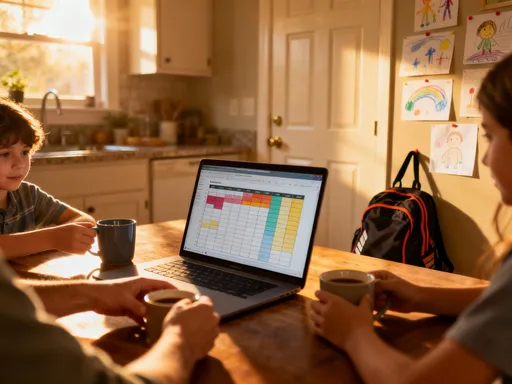
Here’s what surprised me most: the emotional impact. When everyone sees the same numbers, the same options, the same deadlines, something shifts. Resentment fades. Assumptions shrink. Trust grows. I remember one potluck where, in the past, the same two people always ended up buying the most. Someone would say, “I forgot cash,” or “I thought drinks were covered.” This time, I created a shared doc with a simple table: dish, cost estimate, who’s bringing it, and whether it’s reimbursable. I linked to grocery store prices for items like cheese platters and wine. Everyone could edit it. Everyone could see it.
The difference was night and day. No one overcommitted. No one underdelivered. When someone asked, “Is this wine too expensive?” we could check the doc and say, “It’s $18, which is within our $20 limit—go for it.” After the event, one friend said, “I actually felt good about what I brought. I knew it was fair.” That stuck with me. Fairness isn’t just about money—it’s about feeling seen. When we can all see the full picture, we feel like part of the team, not just a contributor.
And let’s be honest—money talk is hard, especially with friends. We don’t want to seem cheap. We don’t want to offend. But when the numbers are out in the open, it’s not personal. It’s practical. It removes the guesswork and the guilt. “I can’t afford the $50 ticket” becomes “The $50 ticket is above our group budget—let’s look for something closer to $30.” That’s not stingy. That’s responsible. That’s inclusive. Shared visibility doesn’t just make planning easier—it makes it kinder. It reminds us that we’re in this together, not competing to spend the most or the least.
Making It Work: A Simple System Anyone Can Start Today
You don’t need a fancy app. You don’t need to be tech-savvy. All you need is a little intention. Here’s the system I use—and that anyone can start tomorrow. First, pick a platform your group already uses. It could be WhatsApp, Facebook Messenger, a shared Google Doc, or even email. The goal is consistency, not complexity. Next, when planning something, take ten minutes to gather 2–3 solid options. Use price comparison tools, Google search, or store websites to get real numbers. Don’t just say, “There’s a place on Main Street.” Say, “Here are three spots: A costs $25/person, B is $30 with parking, C is $22 but no reservations. Links below.”
Then, set a clear decision deadline. “Let me know by Friday at 6 p.m.” Avoid open-ended “We’ll decide later.” That’s how plans die. Assign tasks simply. “Sarah, can you book if we pick A? Mark, you’re great with spreadsheets—can you track who’s bringing what?” Use the shared space to update everyone. If the budget changes, say so. If a plan falls through, post a new option. Keep it visible. Keep it simple.
And here’s a little trick: start small. Try it with something low-stakes, like choosing a movie or splitting a delivery order. Get comfortable with the rhythm. One mom in our group started by comparing pizza places for a kids’ movie night. “Three options,” she wrote. “Prices include delivery. Vote by 5 p.m.” It worked so well, she used it for her daughter’s birthday party. The key is repetition. The more you do it, the more natural it feels. Your group will start to expect clarity. They’ll appreciate the effort. And honestly, they’ll probably thank you.
Beyond Shopping: How This Changes Everyday Decisions
What I didn’t expect was how this habit would spill into other parts of life. Once we got used to clear, visual decision-making, it started showing up in unexpected places. My sister and I used to argue about splitting household chores when we hosted holidays. “I did the dishes last time!” “You didn’t clean the guest bathroom!” Now, we use a shared checklist with checkboxes. We assign tasks in advance. No drama. No guilt. Just clarity.
Even our communication improved. Because we were used to seeing things laid out clearly, we started being more direct—and more patient. Instead of getting frustrated when someone didn’t respond, we’d say, “Just checking—did you see the options I sent?” We stopped assuming silence meant disagreement. We started asking, “What’s your take on Option B?” It made us better listeners. Better collaborators. Better friends.
One of the most touching moments was when my mom’s book club used the method to plan their annual retreat. They compared three cabins, looked at costs, checked accessibility, and voted as a group. “It felt grown-up,” one member said. “Like we were really taking care of each other.” That’s the thing—this isn’t just about efficiency. It’s about care. When we take the time to present options clearly, we’re saying, “I value your time. I respect your limits. I want this to work for all of us.” That’s powerful. And it builds over time. The more we practice clear communication, the more natural it becomes in every part of life.
Tech That Serves People, Not the Other Way Around
Here’s what I’ve come to believe: the best technology doesn’t shout for attention. It doesn’t require us to learn new skills or spend hours setting it up. The best tech quietly supports the life we already want to live. Price comparison tools, at their core, are simple. They show us choices. They save us time. They help us make fair decisions. But in the context of group planning, they do something deeper. They help us show up for each other—with clarity, with respect, with care.
We don’t need more apps. We don’t need more notifications. We need better ways to connect. And sometimes, that starts with something as simple as sharing a link with prices. It’s not about being perfect. It’s about being present. It’s about saying, “I see you. I hear you. Let’s make this work—together.”
So the next time your group chat starts spinning in circles, try this: pause. Gather two or three real options. Share them clearly. Set a deadline. Let people choose. You might be surprised how quickly “We’ll figure it out later” turns into “We’ve got a plan.” And more than that—you might find your relationships feeling a little lighter, a little stronger, and a lot more connected. Because when we make planning easier, we make life better. And isn’t that what we all want?